The distinction
What makes an application AI-powered
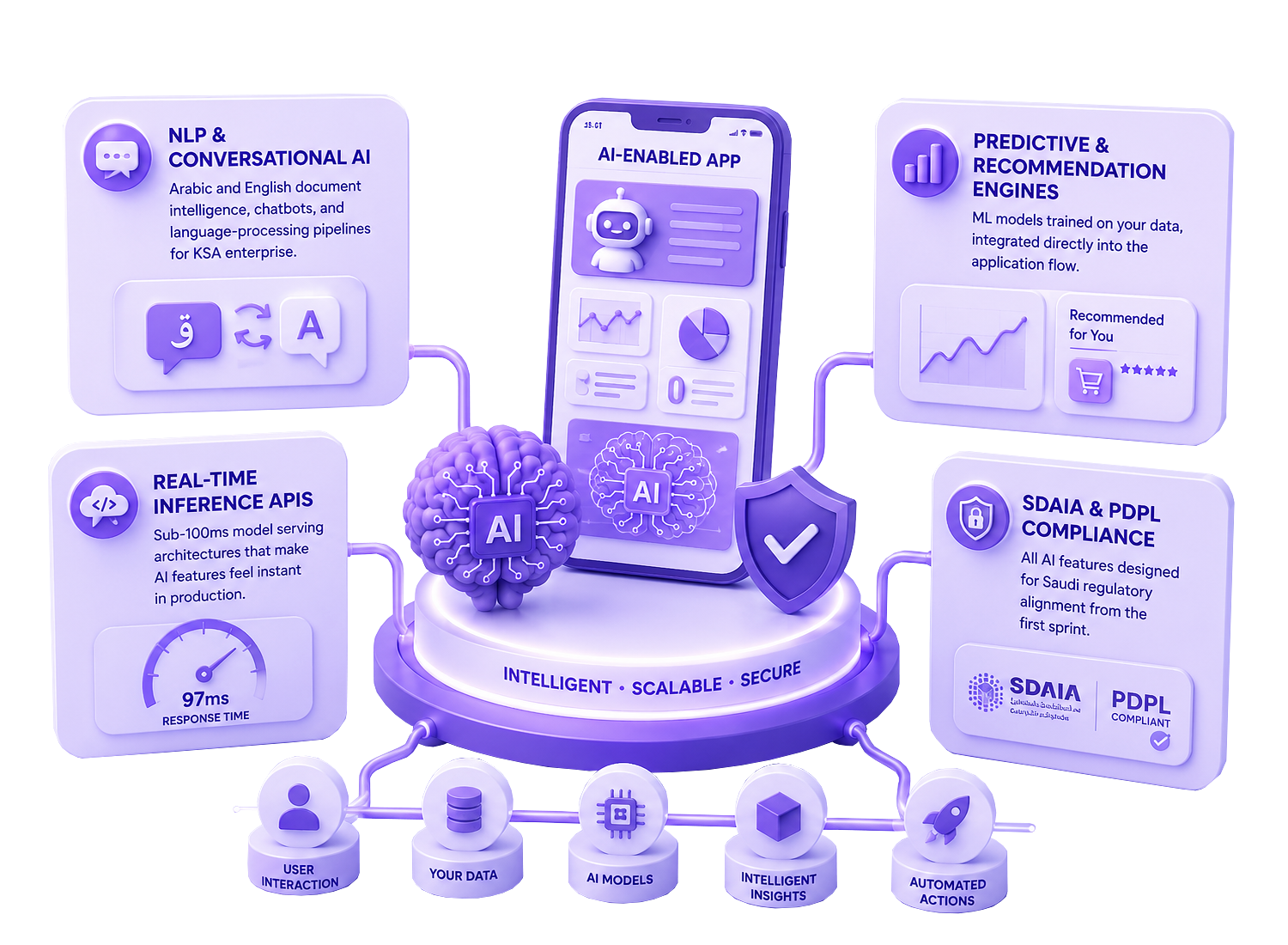
Adding a chatbot to a form does not make an application intelligent. The distinction is architectural: an AI-powered application treats prediction as a first-class part of its logic, alongside the database and the interface.
Traditional enterprise software encodes rules a person wrote down. When conditions change, someone edits the rules. An AI-powered platform infers its rules from data, which makes it adaptive — and also makes it something that has to be monitored, because a model trained on last year's behaviour will quietly decay when behaviour changes.
That trade-off is the design conversation. Some decisions should stay deterministic: an application that calculates VAT should not be probabilistic. Others benefit from inference: demand forecasting, anomaly detection, prioritisation. Deciding which is which, per feature, is the first thing we do.
What ships with every platform
Model versioning and rollback, drift monitoring with alerting thresholds, explainability for any decision affecting a person, human override paths on automated actions, and audit logging sufficient for a PDPL review. These are not add-ons priced separately — a platform without them is not finished.